
It is the first question we hear on the phone, and it cannot be answered properly with a single number. Two kitchens with the same dimensions can differ a great deal in cost, depending on the materials and hardware chosen. In this guide we explain exactly what determines the price, so you can compare every quote, including ours, on clear criteria.
The price per linear meter
Many ads quote a cost per linear meter. It sounds practical, but it says very little. A meter of plain shelves costs far less than a meter with heavy-duty drawers, a corner pull-out and a built-in appliance. The right comparison is always made with a complete, itemized quote, which shows the carcasses, the door fronts, the hardware, the countertop and what the installation includes.
The 5 factors that determine the cost
1. The door fronts (30-40% of the value)
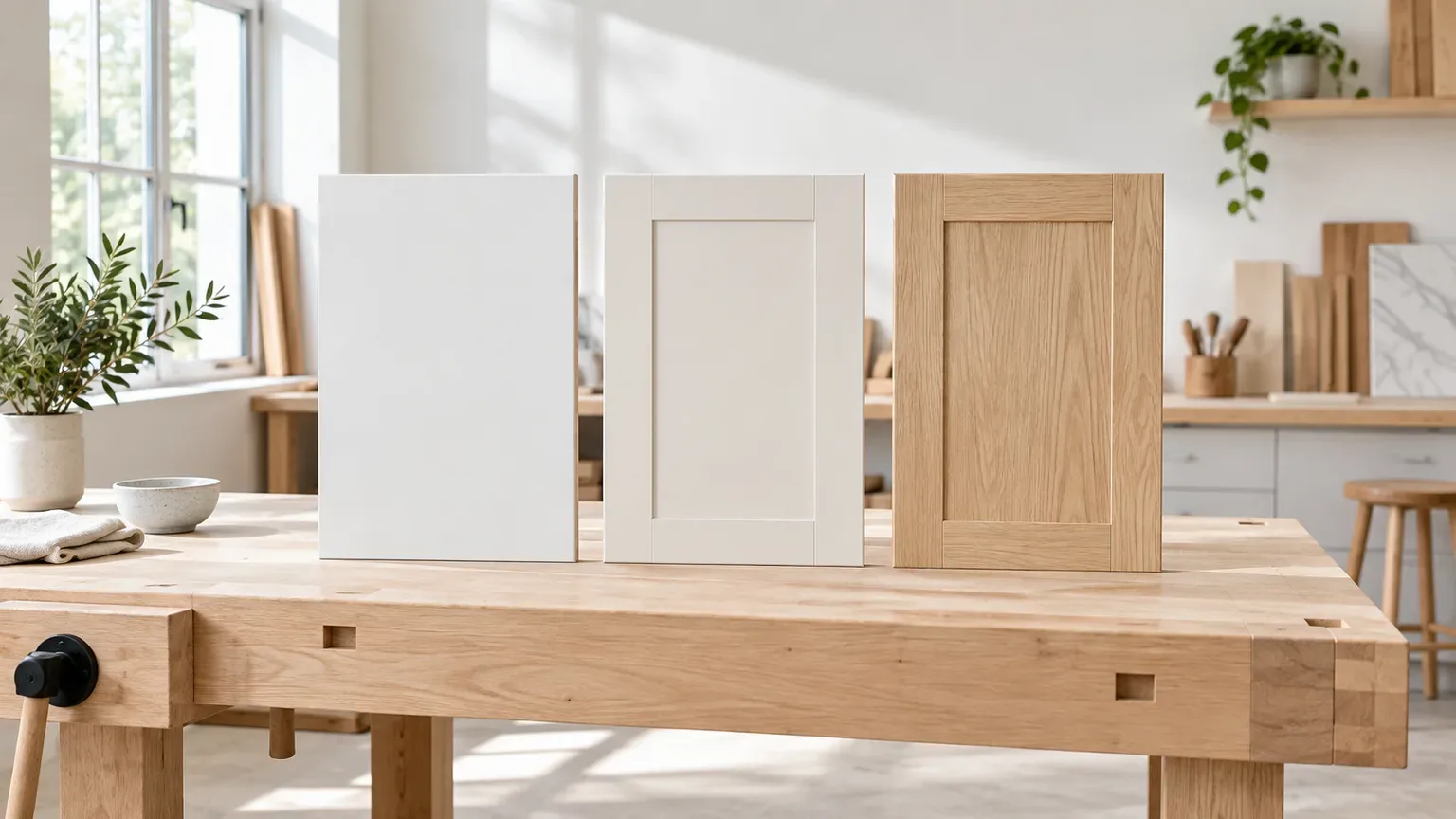
The doors are what you see and touch every day, and the factor with the biggest effect on the price. The range starts with economical melamine, moves on to lacquered MDF in any shade you want, and goes up to veneer and solid wood. Each step noticeably changes both the look and the cost. We break down the differences in the materials guide, with the pros and cons of each.
2. The countertop and its material
An HPL countertop costs far less than a quartz one. Quartz, however, stands up to hot pans, stains and scratches for decades without a mark. On smaller budgets we often suggest more economical door fronts and a better countertop, because the countertop is not easy to replace later.
3. The drawer and cabinet hardware
Soft-close drawers, pull-outs, corner pull-outs, lift-up doors. These determine how the kitchen will work after thousands of openings. Brand-name hardware costs more than no-name hardware, and the difference shows in use after a few years. This is one place where we do not suggest the cheaper option.
4. The appliances and whether they are included in the quote
This is where comparisons often go wrong, because some quotes include appliances and others do not. We build the kitchen around the appliances you choose, whether you buy them through our partners or on your own. The itemized quote shows clearly what is included.
5. The geometry of the space
A straight kitchen costs less than an L-shaped one with an island, and the difference is not only about the length. Corners need special hardware, islands need power and water lines, high ceilings need cabinets built all the way up. That is why we do not give a final price before measuring the space.
Where it pays to invest
- Worth it: hardware, countertop, a well-planned layout, quality edge banding (ABS) on melamine
- Worth it in some cases: expensive door fronts, if the kitchen opens onto the living room and is always in view
- Rarely worth it: appliances bigger than you actually need, and decorative elements you will not use
How is the cost of your project determined?
The process starts with a meeting at our showroom in Nea Ionia. There you can see the materials up close, and we can talk through the requirements of your space. After the on-site measurement, we give you an itemized, binding quote. That way the final cost is fully transparent, with no added charges or gray areas at delivery.
Request a quote for your space